Independent review guide
1666 Amsterdam Prologue Review: Is the Demo Worth Playing?
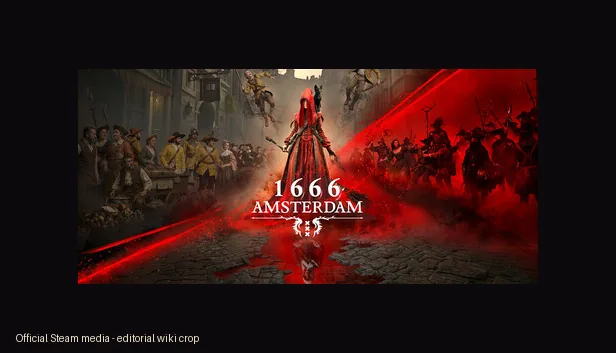
This 1666 Amsterdam Prologue review gives a practical verdict without pretending the free narrative demo is a finished game. We compare its strongest ideas, common player complaints, official store facts, and the type of player most likely to enjoy its short visit to a supernatural 1666 Amsterdam.
Quick verdict
Worth playing for free, but treat it as a mood piece and concept test
The short answer is yes: 1666: Amsterdam Prologue is worth trying if its dark historical setting, supernatural investigation, cat companion, and story-first presentation already appeal to you. It is free, officially available on Steam and Epic, and designed as a roughly thirty-minute introduction rather than a traditional multi-hour demo. That low commitment makes it easy to judge the tone for yourself.
The important reservation is scope. The Prologue introduces Noa, the Collector premise, a visually distinctive city, and a few choice-driven moments, but it does not fully prove the combat depth, stealth systems, progression, mission variety, or technical polish of the planned larger game. Players looking for a dense action sandbox may finish feeling that they watched an extended pitch instead of playing a complete vertical slice.
This page is a review roundup and decision guide, not a claim that our editors completed a private preview build. The verdict combines the public Prologue's stated design, official footage and store information, current Steam review signals, and recurring points raised by published reviews. That transparent boundary matters because impressions can change as Panache replaces assets, patches the demo, and moves toward Early Access.
Review scorecard
What the Prologue proves—and what it does not
A short demo should be judged on the questions it can realistically answer.| Area | Verdict | Why it matters |
|---|---|---|
| Atmosphere and art direction | Strong | The chiaroscuro lighting, narrow streets, painterly framing, and occult imagery create an identity that is immediately recognizable. |
| Story hook | Promising | Noa's investigation, The Originals, and the Collector establish a mystery without explaining away every threat in the opening. |
| Player choice | Interesting but limited | The companion choice and dialogue direction suggest agency, although a thirty-minute prologue cannot demonstrate long-term consequences. |
| Combat and stealth depth | Not yet proven | Official material shows confrontation, witchcraft, observation, and deception, but the public slice is too short to validate a full systemic loop. |
| Performance and polish | Mixed | Published reviews and user feedback praise the concept while repeatedly noting optimization, rough transitions, animation issues, or unfinished presentation. |
| Value | Easy recommendation at free | There is no purchase risk, but the demo is best viewed as a taste of tone and direction rather than a promise of final quality. |
What works
The Prologue sells a memorable world faster than it sells a full game
Its best qualities are identity, curiosity, and a willingness to avoid a generic historical-action look.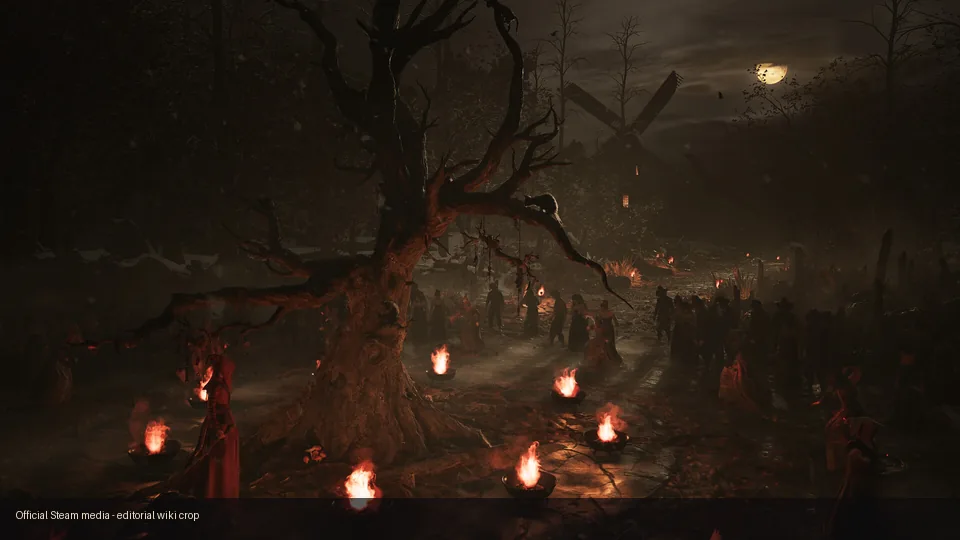
A setting with a clear point of view
Many historical action games use a famous city as scenery. The Prologue presents Amsterdam as a character: wet streets, compressed interiors, candlelit faces, wealth beside decay, and supernatural unease. The Dutch-painting influence is more than a color filter because it shapes framing, light, and the feeling that every room hides a private bargain.
Noa and the Collector create a useful mystery
The opening gives enough information to understand Noa's role without turning the first half hour into a lore encyclopedia. The Collector's demands and the threat of The Originals create immediate stakes. The mystery works best when the game lets images, performances, and small environmental details carry the tension instead of explaining every symbol.
The companion choice is a smart conversation starter
Choosing between the two cats is memorable because it feels personal, visible, and easy to discuss. It also hints that Panache wants decisions to affect how players move through the story. The Prologue cannot prove that this choice branches the entire campaign, so it should be treated as a tone-setting example rather than evidence of a massive choice system.
It communicates ambition without charging for access
A free Prologue is a sensible way to let players test the visual direction and storytelling style before wishlisting a game with no final release date. Even skeptical players can spend half an hour with it, compare their experience with public reviews, and leave without buying a founder pack or trusting an unofficial download.
Thirty minutes is not enough to validate the main loop
The full game is described as a third-person action adventure built around investigation, witchcraft, deception, and confrontation. A short narrative opening can establish those verbs, but it cannot show whether enemy encounters stay varied, stealth remains readable, upgrades matter, or decisions change later missions. Strong atmosphere should not be mistaken for proven systemic depth.
Technical roughness is part of the current conversation
Published reviews and Steam feedback repeatedly mention optimization, transitions, animation quality, or an unfinished feeling. Hardware and patches can change individual results, so this guide does not turn every complaint into a universal bug. The fair conclusion is that players sensitive to frame pacing or presentation issues should expect an early public build, not final-game polish.
The AI-assets dispute affects trust
The Prologue launch was followed by reporting about generative-AI material and Panache's plan to replace disputed assets with human-made work. That response is relevant to a review because visual authorship is central to the game's identity. It does not automatically erase the art direction, but cautious players may prefer to revisit the build and official statements before Early Access.
A cinematic opening may disappoint action-first players
If your main question is whether 1666 Amsterdam offers deep combat immediately, the Prologue is not an ideal proof point. Its pace favors dialogue, observation, staging, and atmosphere. Players who enjoy narrative setup may see restraint; players expecting a combat showcase may see a slow teaser. Both reactions are reasonable because the demo's job is unusually narrow.
Where it struggles
The demo creates interest, but polish and mechanical proof lag behind
The Mixed Steam label makes sense: players are reacting to both a compelling pitch and a rough public build.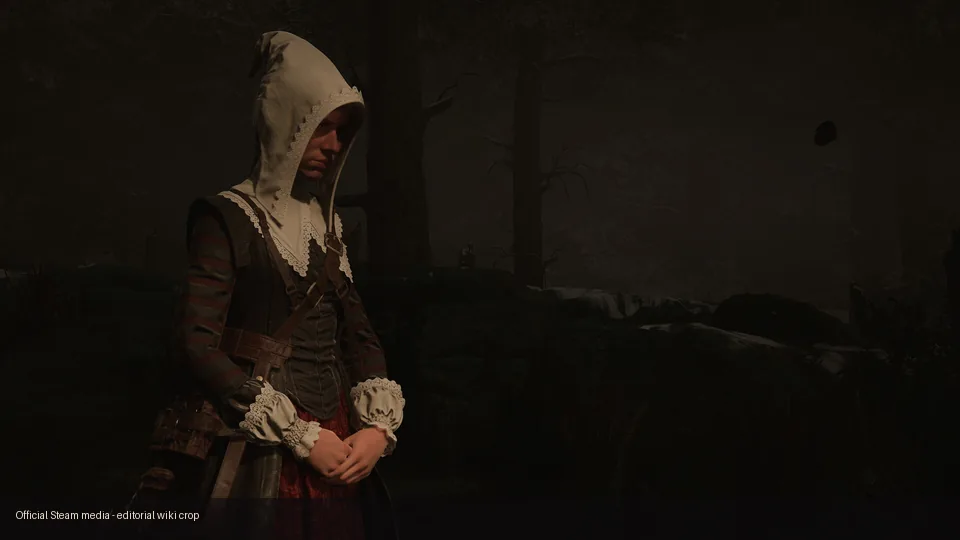
Player fit
Who should play the 1666 Amsterdam Prologue?
Use your preferred game style—not hype or backlash—as the deciding filter.Play it now if you value atmosphere
Try the Prologue if you enjoy historical settings, occult mysteries, cinematic narrative games, environmental storytelling, and short demos that introduce a world before explaining every mechanic. It is also useful if you want firsthand context before reading arguments about the art direction or AI-assets controversy.
Wait if performance issues ruin first impressions
If rough animation, optimization uncertainty, or unfinished presentation prevents you from enjoying early builds, wait for patch notes or the Early Access version. A later build may better represent Panache's intended quality than the current free introduction.
Do not use it as a full-game benchmark
The Prologue can tell you whether the mood, characters, and premise interest you. It cannot reliably tell you the final campaign length, build variety, enemy design, progression depth, endgame structure, console performance, or whether every choice has major consequences.
Use official stores only
There is no reason to download an APK, repack, cracked installer, browser version, or mirror. The current public path is the official Steam or Epic store page. If a website promises a full-game build or direct installer before an official release, treat it as unverified.
Version freshness check
Release and review facts verified on July 23, 2026
This project contains download-intent pages, so official availability was checked before publishing this review. Steam still lists the free Prologue as released on June 5, 2026 and describes it as an approximately thirty-minute experience. The full 1666: Amsterdam Steam page still has no confirmed public release date and points toward a future Early Access stage.
The official public store pages do not expose a stable semantic version, reusable file size, checksum, or permanent direct installer URL. No version number or download link was invented. Every download call to action on this page therefore uses an official store page as the safe fallback. Steam's review counts and percentage are live metrics, so this article records the Mixed label and verification date instead of promising a permanent score.
- Checked
- July 23, 2026
- Public build
- 1666: Amsterdam (Prologue)
- Release date
- June 5, 2026
- Stated length
- About 30 minutes
- Steam review label
- Mixed; live score can change
- Full game
- TBA / Early Access planned
- Download CTA
- Official Steam page fallback
Final recommendation
Try it for the world, not as proof that the full game is finished
Our 1666 Amsterdam Prologue review verdict is cautiously positive. The free demo has a strong visual identity, an intriguing supernatural premise, and enough unusual detail to justify thirty minutes of curiosity. The cat choice, Noa's investigation, and painterly Amsterdam give the project a personality that many technically smoother demos never establish.
The recommendation stays cautious because the current slice is short, technically debated, and mechanically incomplete. It is best for players who can separate potential from proof. Play it, decide whether the mood works for you, then wishlist or wait based on official updates rather than assuming the Prologue guarantees the final game's scope or polish.
Sources and method
Official facts and independent review context
Official store pages support release, length, availability, and live review-status claims. Independent reviews are used for recurring strengths and weaknesses, not copied scores or wording. Store metrics can change after the July 23, 2026 check.
Continue the guide
What to read after the review
Prologue walkthrough
Use a spoiler-light route guide for the opening flow, companion choice, investigation scenes, and first-run expectations.
Open walkthroughAI assets explained
Separate confirmed reporting, Panache's replacement plan, and speculation around the public Prologue build.
Read the explainerFAQ